
- By tabacco_Admin
- August 2026
- Jul 30, 2026
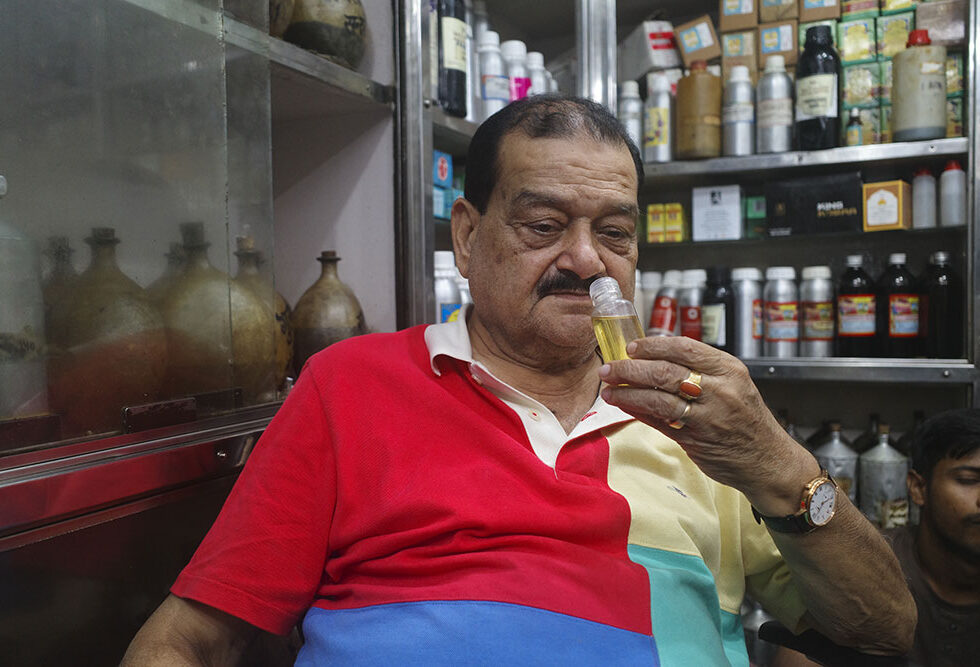
Compounding is an art that not everyone can master. Rajeev Mehrotra, proprietor of the renowned Kannauj-based firm Lala Kedarnath Khatri, is widely recognized for his expertise in this specialized field. Lala Kedarnath Khatri is one of the oldest and most respected fragrance houses in the “Perfume City” of Kannauj. The company enjoys a strong reputation, particularly for developing compounds for the pan masala, tobacco, and incense industries.
According to Rajeev Mehrotra, compounding is not merely his profession—it is his passion. Although he has been associated with his family’s business since the age of 15, he has been actively managing it in a professional capacity since 1993.
Responding to a question from Tobacco Plus, Mehrotra explained that cardamom plays the most important role in pan masala compounding. The base note is generally built around kewda (screwpine) and rose, while patchouli adds an earthy character and cardamom imparts the distinctive aroma. The quality of cardamom varies significantly, with premium pan masala brands using high-grade cardamom. According to him, Swiss Cardamom is among the most expensive varieties, costing around ₹40,000–50,000 per kilogram.
He further noted that synthetic aromatic ingredients often perform better than natural essences in pan masala applications because they provide greater flavour stability over time. Ingredients such as Isodimystral help develop the desired mouthfeel (“luab”), enabling pan masala to retain its taste and quality for several months.
Rajeev Mehrotra primarily develops compounds for the pan masala, tobacco, and incense industries, although he also formulates compounds for the soap industry whenever there is demand. Incense compounds manufactured by the company range from ₹600 to ₹2,000 per kilogram, depending on quality and composition.
Speaking to Tobacco Plus, Mehrotra explained that compounds are formulated according to the customer’s budget and product requirements. However, he emphasized an important economic principle:
“The more premium the compound, the smaller the quantity required in production. A cheaper compound may cost less initially, but manufacturers need to use a larger quantity to achieve the desired fragrance and performance.”
Beyond manufacturing compounds, Mehrotra actively supports newcomers entering the industry. He advises entrepreneurs on selecting suitable ingredients and determining their optimum proportions for different products.
Discussing chewing tobacco products commonly consumed alongside pan masala, he observed that Tulsi 00 blends well with almost every pan masala brand. According to him, 120 is another popular consumer preference, while users seeking a stronger nicotine experience often choose Ratna 300 with pan or pan masala.
Mehrotra also pointed out that fragrance preferences vary from one region to another. Consumers in Uttar Pradesh generally favour rose and kewda notes, whereas Maharashtra and Gujarat show a stronger preference for Shamama, saffron (kesar), and richer oriental fragrance profiles.
With more than three decades of experience in compounding, Rajeev Mehrotra has built a clientele that extends far beyond Kannauj. Customers travel from across India to seek his expertise, and his compounds even find their way to Nepal through business associates.
He explained that while a few standard compounds are kept ready in stock, most formulations are custom-developed according to individual customer requirements.
Replying to another question from Tobacco Plus, Mehrotra concluded:
“The price of a compound ultimately depends on the customer’s budget, the fragrance profile they require, and the performance they expect. We formulate compounds that precisely match their expectations.”