

- By tabacco_Admin
- November 2026
- Oct 28, 2026
Arbitrary Cess Is No Justice: No Relief from HSNS Cess Even When Machines Remain Shut and Digitally Sealed
Division Bench overturns Single Bench order; next hearing scheduled for November 17
There is no denying that tax revenues enable the government to undertake welfare initiatives, protect public health, develop infrastructure and meet national security requirements. However, taxation must be fair and reasonable. Under the Indian Constitution, the government’s power to levy taxes is not unlimited. Unfortunately, the pan masala and tobacco industries are facing a situation in which manufacturers are being subjected to arbitrary cess based on the hypothetical production capacity of their machines. This appears uncomfortably similar to a form of medieval taxation imposed without adequate regard for actual economic activity. Compelling manufacturers to pay Health Security and National Security Cess (HSNS Cess) on machines that remain shut and digitally sealed runs contrary to the fundamental principles of natural justice. The basic philosophy of the Constitution demands that taxation be rational and proportionate, rather than being determined solely by hypothetical or theoretical estimates.
Consider a situation in which a manufacturer does not operate its pan masala production machines for two or three months for any reason, and the machines remain digitally sealed by the concerned department. Even in such circumstances, the manufacturer may continue to face a cess liability without relief. Such a situation raises serious questions of fairness, reasonableness and proportionality. The manufacturer has produced nothing, yet remains liable to pay a substantial amount merely because the machine is installed on the premises. When the manufacturer subsequently seeks to restart the machine, an additional fee must be paid, after which the amount deposited for the subsequent month becomes eligible for credit. This procedure has emerged as a serious financial challenge for the pan masala and tobacco industries, leaving manufacturers struggling to cope with an increasingly difficult operating environment.
The Health Security and National Security Cess Act, 2025, and the associated Rules, 2026, introduced by the Central Government, provide the statutory framework for imposing this special cess on pan masala manufacturers. The stated objectives include mobilising financial resources for public health protection, generating additional revenue for national security priorities and curbing potential tax evasion in the sector. However, the rules framed to achieve these objectives rely on a rigid, capacity-based assessment mechanism that critics argue is disconnected from ground realities. In the name of administrative convenience, the framework effectively assumes that a machine capable of packing 500 pouches per minute operates at 100% of its rated capacity, continuously, 24 hours a day and 365 days a year.
Tax authorities have been accused of disregarding actual production, market demand and sales figures, determining the cess primarily on the estimated production capacity of machines installed at manufacturing premises. This has created unprecedented financial pressure on pan masala manufacturers, particularly micro, small and medium-sized enterprises (MSMEs). Even when actual production is low, market demand declines or operations come to a complete standstill, manufacturers may be required to pay crores of rupees in cess calculated on the maximum rated capacity of their machines. When the tax liability becomes several times higher than the revenue generated through actual production, sustaining business operations becomes increasingly difficult. Several small and medium-sized manufacturing units have consequently been pushed towards closure or the brink of insolvency.
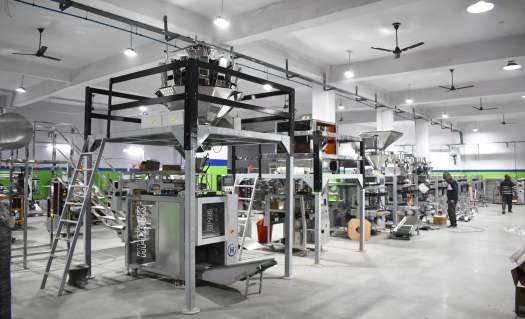
In August, a Single Bench of the Karnataka High Court granted relief to pan masala manufacturers by staying the operation of the disputed capacity-based cess framework. However, the government challenged the decision before a Division Bench. The interim protection was subsequently lifted pending a final decision in the matter. As a result, manufacturers once again found themselves exposed to the same disputed cess regime that had prompted them to approach the High Court.
Several prominent manufacturers from across the country, including Dharampal Satyapal Group’s Dhariwal Industries, had challenged the framework before the Karnataka High Court. The Single Bench ruled in favour of the petitioners, finding serious constitutional infirmities in the impugned mechanism. In its detailed judgment, Justice M. Nagaprasanna observed that determining cess on the basis of the potential or theoretical capacity of machines, rather than actual manufacturing activity, raised fundamental concerns regarding arbitrariness and constitutional validity, particularly under Article 14, which guarantees equality before the law, and Article 19(1)(g), which protects the freedom to practise a profession or carry on a trade or business.
The Single Bench strongly emphasised that constitutional guarantees of equality cannot be undermined merely to simplify tax collection or reduce administrative inconvenience.
Before the court, manufacturers presented practical arguments to demonstrate why theoretical production capacity cannot be treated as equivalent to actual output. No factory in the real world can operate continuously at its maximum rated capacity. Power outages, routine maintenance, mechanical breakdowns, shortages of raw materials, worker absenteeism during festivals and holidays, and fluctuations in market demand all affect production. Machines may therefore operate at reduced speeds or remain idle for extended periods. Treating every machine as though it operates continuously, 24 hours a day, ignores these practical realities and creates an artificial basis for taxation.
The Central Government, however, defended the framework by arguing that the cess was not an ordinary Goods and Services Tax (GST), but a distinct levy enacted by Parliament under its special legislative powers. According to the government’s position, it possesses the constitutional authority to impose such a cess. The government further argued that the pan masala and tobacco industries are vulnerable to tax evasion through unreported production and cash transactions. A machine-capacity-based levy, it maintained, provides an effective, practical and administratively robust mechanism for preventing revenue leakage.
The Karnataka High Court’s Single Bench considered these arguments but distinguished between Parliament’s authority to impose a cess and the constitutional validity of the method used to calculate and collect it. Although Parliament has legislative powers to impose taxes and cesses within the constitutional framework, the mechanism adopted for determining the disputed levy must still satisfy constitutional requirements, including Article 14.
Article 14 does not merely require equal treatment of persons in similar circumstances. Its established principles also prohibit arbitrary classifications and require a rational basis for differential treatment where circumstances materially differ. One of the major concerns identified in the disputed framework was that machines with significantly different production capacities, technologies and operating speeds could be placed within the same tax category or slab.
For example, machines capable of packing 65, 100 and 500 pouches per minute were reportedly classified within the same category and subjected to the same cess rate. Such an approach fails to account for substantial differences in production capacity. Treating a small manufacturing unit and a large industrial facility as equivalent, despite their markedly different capacities, raises serious questions about the reasonableness of the classification.
The High Court also rejected the argument that the difficulty of tracking actual production and preventing tax evasion in the pan masala industry justified an estimated levy based on machine capacity. Administrative challenges, the court reasoned, cannot by themselves justify a taxation mechanism that disregards actual operating conditions and produces arbitrary outcomes.
The inability of the administration to monitor or verify production efficiently cannot be used to make taxpayers liable for a levy that bears little or no relationship to their actual manufacturing activity. If inspection, monitoring or tracking systems are inadequate, the resulting administrative difficulties should not automatically be transferred to taxpayers in the form of an excessive or disproportionate financial burden. Administrative convenience cannot come at the expense of constitutional equality.
Another contentious provision concerns the conditions for obtaining an exemption or abatement from the cess. Under the rules, manufacturers are entitled to relief only when their machines remain completely shut for at least 15 consecutive days. The Single Bench found this minimum shutdown requirement excessively rigid, impractical and potentially arbitrary.
Manufacturing units may have to suspend operations for two, five or ten days because of technical faults, power shortages, raw-material constraints, labour strikes or an unexpected decline in demand. Under a 15-day threshold, a unit that remains shut for 12 days may still be liable to pay the full monthly capacity-based cess, even if it has produced nothing or only a negligible quantity during that period.
This creates a disproportionate financial burden because the tax liability is determined by the machine’s theoretical capacity rather than its actual utilisation. The issue becomes even more serious when a machine remains digitally sealed by the department and cannot legally be operated during the relevant period.
The central objective of taxation should be the fair and lawful collection of revenue, not the destruction of legitimate businesses. Administrative convenience cannot become a justification for undermining the fundamental rights of citizens and businesses. The principles of natural justice demand that tax obligations be imposed through a rational, transparent and legally sustainable framework. Where production has stopped and a machine remains digitally sealed, the continued imposition of a substantial capacity-based levy raises important questions about proportionality, fairness and the underlying purpose of the legislation.
The dispute took another turn when the matter reached the Division Bench. The Central Government argued that the cess was being implemented uniformly across the country, but the Single Bench’s stay had disrupted the intended uniformity of the levy. The government therefore sought the removal of the interim protection until the final judgment, citing the need to maintain revenue collection and administrative consistency nationwide.
After considering the government’s submissions, the Division Bench lifted the stay on September 17. The decision restored the immediate applicability of the disputed framework while the underlying constitutional challenge remains to be decided. For manufacturers, this has once again created uncertainty over their financial liabilities and the future of the capacity-based cess mechanism.
The next hearing is scheduled for November 17. The proceedings may provide greater clarity on whether the disputed framework will continue in its present form or undergo a fundamental change. For now, the entire industry is watching the Karnataka High Court closely.
The central question before the Division Bench is whether an industry can legitimately be subjected to a taxation mechanism of this nature merely because the government believes that the sector presents a heightened risk of tax evasion. The issue is not simply whether the government can impose a cess, but whether the method used to calculate that cess is constitutionally sound, proportionate and consistent with the realities of industrial production.
Manufacturers hope that the Division Bench will uphold the principles underlying the Single Bench’s decision and ensure that the taxation framework adequately accounts for actual production, genuine operational shutdowns and differences in machine capacity. A favourable final ruling could provide substantial relief to pan masala manufacturers while reinforcing the broader principles of constitutional equality, freedom of trade and fair taxation.
Until the Division Bench delivers its final judgment, the industry will continue to face a fundamental question: will India’s taxation policy be guided by natural justice, proportionality and rational assessment, or will administrative considerations continue to expose manufacturers to uncertainty and financial pressure through a system based on theoretical production capacity?
The November 17 hearing could prove significant in determining the future course of this contentious dispute.