
- By tabacco_Admin
- August 2026
- Jul 30, 2026
Thousands of Pan Traders Raise Their Voice at Mumbai’s Azad Maidan Against the Use of MCOCA and Section 328 of the Bharatiya Nyaya Sanhita in Maharashtra
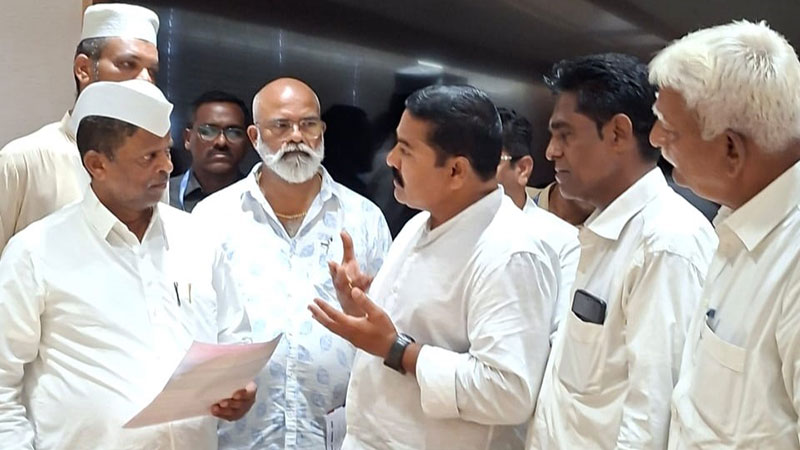
Memorandum Submitted to FDA Minister Narhari Zirwal and Maharashtra Deputy Chief Minister Eknath Shinde
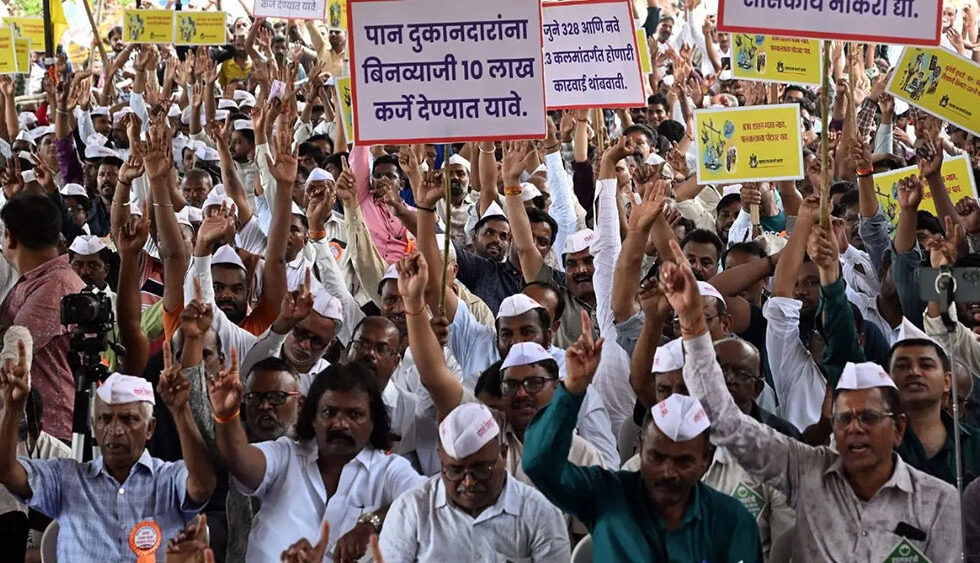
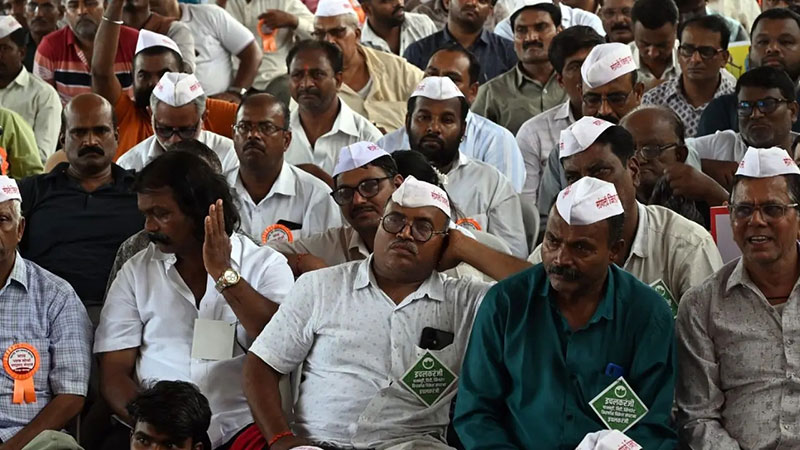
On 14 July, pan traders’ associations from across Maharashtra gathered at Mumbai’s Azad Maidan for a massive protest demonstration. Far more than a routine trade agitation, the rally reflected the growing resentment among small traders against what they described as the Maharashtra government’s use of disproportionately harsh laws against small businesses.
The pan masala and tobacco industry today finds itself in an extremely vulnerable position much like a tongue caught between thirty-two teeth, never knowing when it may be hurt. The industry has been grappling with one challenge after another, and on several occasions the High Courts and even the Supreme Court have provided relief through critical judicial observations against stringent actions taken by various state governments. However, these judicial interventions appear to have had little impact on government policy. Maharashtra’s latest move to intensify action against the alleged illegal trade in gutkha and pan masala is seen by many in the industry as another example of this trend.
Ironically, the very industry that contributes thousands of crores of rupees in tax revenue every year and supports the livelihood of millions of small retailers, farmers, and workers is now fighting to protect its reputation and existence.
The Maharashtra Government has now drawn up what is being described as its toughest enforcement strategy yet against products such as pan masala, flavoured supari, and zarda. Industry representatives argue that the proposed action treats these products as though they were deadly poisons, despite the fact that gutkha has already been banned for years.
The policy was first announced by Chief Minister Devendra Fadnavis during the winter session of the Maharashtra Legislative Assembly in Nagpur. He stated that those involved in the illegal manufacture, transportation, and sale of gutkha would face action under the Maharashtra Control of Organised Crime Act (MCOCA), 1999. Industry stakeholders, however, point out that gutkha has been banned across the country for years and claim that no legitimate manufacturer is engaged in its production today.
Acting on the Chief Minister’s announcement, Food and Drug Administration (FDA) Minister Narhari Zirwal and FDA Commissioner Tukaram Mundhe instructed all regional and district officials to invoke MCOCA in cases involving illegal gutkha and adulterated prohibited food products.

It is noteworthy that MCOCA is one of India’s toughest criminal laws and has traditionally been invoked against organised crime syndicates, underworld networks, extortion rackets, and other serious criminal activities.
Under the banner of the Maharashtra Pan Vyapari Mahasangh, thousands of pan shop owners assembled on 14 July to protest what they described as the misuse of both MCOCA and Section 328 of the Bharatiya Nyaya Sanhita (BNS) by the authorities. According to the protesters, the government’s approach raises a fundamental question: Are laws enacted to combat organised crime now being directed against society’s smallest and economically weakest traders?
It is important to note that pan masala and tobacco/nicotine-containing flavoured gutkha have remained completely banned in Maharashtra for the past fourteen years, with the prohibition coming into effect in July 2012. According to the government, despite the ban, illegal consignments entering the state continue to fuel an underground trade, posing a serious health risk, particularly to young people and students.
The Fadnavis government has directed district authorities to intensify public awareness campaigns against products such as gutkha, pan masala, flavoured tobacco, mawa, and kharra.
Industry representatives, however, argue that official FDA notifications often mention pan masala and flavoured supari alongside gutkha, effectively placing them in the same category of prohibited and hazardous products. They contend that this is misleading because gutkha has already been prohibited, and manufacturers have long ceased its legal production. Furthermore, they emphasize that pan masala, by definition, is a tobacco-free product and does not contain nicotine or any tobacco ingredient.
At present, the illegal manufacture, storage, transportation, or sale of gutkha or prohibited products in Maharashtra attracts action under several existing laws. These include the Food Safety and Standards Act, 2006, particularly Section 26 (manufacture and sale of unsafe or prohibited food), Section 27 (liability relating to distribution and storage), and Section 59, which provides stringent punishment, including imprisonment and heavy fines, for the sale of unsafe food.
Where authorities detect large-scale illegal trade, transportation, or smuggling, additional legal provisions may also be invoked, including Sections 272 and 273 of the Indian Penal Code relating to adulterated or harmful food products, Section 188 for disobedience of lawful government orders, Sections 420, 468, and 471 dealing with cheating, forged documents, and fraudulent billing, as well as provisions under the Cigarettes and Other Tobacco Products Act (COTPA), 2003. Where tobacco products are involved, authorities may also invoke Sections 7, 8, 9, and 10 relating to packaging, labelling, and advertising violations, along with Section 20, which prescribes penalties for illegal sale. In certain cases involving misuse of chemical substances, provisions of the Drugs and Cosmetics Act may also be applied.
The existing legal framework already includes provisions under the GST Act to deal with tax evasion, along with several other special laws wherever applicable.
The primary objective of a stringent law such as the Maharashtra Control of Organised Crime Act (MCOCA) was to dismantle underworld networks, extortion rackets, and large-scale organised criminal syndicates. However, when such legislation is invoked against small paan shop owners accused of retailing gutkha or other prohibited tobacco products, it exposes a clear disconnect between the original intent of the law and its application on the ground.
Several High Courts have also observed in the past that Section 328 which deals with administering poisonous substances or causing grievous harm cannot be applied indiscriminately in cases involving the sale of paan or gutkha. Equating a small retailer with an organised criminal not only makes obtaining bail extremely difficult but also devastates the trader’s family socially and economically.
Several manufacturers and trading companies have previously challenged Maharashtra’s ban on gutkha and flavoured pan masala before the courts. While some matters are still pending before the High Court and the Supreme Court, the Supreme Court has, over the years, upheld the state’s ban in several petitions, although the litigation as a whole has not yet reached a final conclusion. It is against this backdrop that the Maharashtra Government is now moving towards even stricter legal provisions.
The Fadnavis Government argues that the smuggling of gutkha and pan masala is being carried out through organised networks. Consequently, it is preparing to invoke MCOCA against company owners, transport operators, and alleged masterminds behind such activities. MCOCA contains stringent bail provisions, permits certain statements made before police officers to be treated as evidence under specified conditions, allows a longer period for filing charge sheets, and provides for severe imprisonment.
However, in the context of the ongoing agitation launched by small traders under the banner of the Maharashtra Pan Vyapari Mahasangh, it is worth recalling that a similar attempt by the Maharashtra Government had previously failed before the courts.
A notable example is a judgment of the Nagpur Bench of the Bombay High Court, which stayed the application of Section 328 of the Indian Penal Code, observing that the provision could only be invoked in cases involving poisonous substances. The Court held that products such as pan masala, flavoured supari, kharra, and mawa could not be categorised as poisonous substances.
This is significant because conviction under Section 328 carries a punishment of up to ten years’ imprisonment, along with a substantial fine.
Earlier as well, the Bombay High Court had ruled in favour of the industry by refusing to classify pan masala, flavoured tobacco, supari, kharra, and mawa as poisonous substances. Justices Ranjit More and Bharati Dangre quashed criminal proceedings registered against two businessmen from Kandivali, Mumbai, under Sections 188, 272, 273, and 328 of the IPC, holding that pan masala could not be treated as a poisonous substance.
Maharashtra is home to more than one million paan vendors, many of whom depend entirely on this small business for their livelihood. It is undoubtedly the responsibility of the State Government to protect public health by curbing the sale of illegal and harmful products. Even the protesters have made it clear that they do not oppose action against the illegal sale of gutkha.
Their objection is not to the policy itself, but to what they describe as its selective and oppressive implementation. According to them, while the matter remains pending before the Supreme Court, the administration’s resort to immediate and punitive action appears inconsistent with the principles of justice.
The Federation has also demanded that if a product is to be prohibited, there should be a uniform national policy governing its regulation. This demand appears logical because when one state completely bans a product while neighbouring states continue to permit its sale, it often encourages cross-border smuggling and corruption.
Ultimately, it is the local small trader who bears the brunt of such inconsistencies, caught between regulatory enforcement and legal complexities.
The administration must recognise the distinction between organised crime and people struggling to earn a livelihood. When enforcement agencies fail to dismantle major criminal syndicates and instead demonstrate their effectiveness by targeting small retailers, they risk undermining public confidence in the rule of law.
The government should intervene constructively and without delay. The fear of the law should exist among criminals not among small shopkeepers striving to support their families. Instead of relying primarily on punitive measures, the State should adopt a policy of dialogue and formulate a transparent and practical regulatory framework that safeguards public health while also protecting the livelihoods, dignity, and future of millions of families.
Meanwhile, the Maharashtra Food and Drug Administration has once again issued its annual notification extending the ban, despite the fact that similar yearly notifications issued by the Food Commissioner have been quashed on several occasions by various High Courts.
Even the Supreme Court of India has previously observed that tobacco is not inherently such a dangerous substance as to necessarily warrant a complete prohibition, and further remarked that if such a prohibition is to be imposed, it is a matter for Parliament rather than individual state governments. Nevertheless, these judicial observations appear to have had little impact on government policy.
Products such as pan masala, flavoured supari, kharra, and mawa support an extensive domestic value chain involving workers, retailers, distributors, transporters, and entrepreneurs most of whom are Indians. Any action perceived as prejudicial towards this industry, therefore, risks affecting the livelihoods of millions.
It is hoped that Chief Minister Devendra Fadnavis will give thoughtful and sympathetic consideration to the concerns raised by the industry and seek a balanced solution that protects both public health and legitimate livelihoods.