
- By tabacco_Admin
- Marketing
- Aug 25, 2026
A Step-by-Step Marketing Strategy to Make a Pan Masala Brand the Market’s First Choice
The Indian pan masala industry has become more competitive than ever. Hundreds of brands are present in the market, and almost every company is trying to reach consumers with better taste, attractive packaging, and competitive pricing. In such an environment, simply producing a good product is no guarantee of success. Real success comes when customers themselves walk into a shop and ask for a particular brand by name. This situation is known as Customer Pull, and it is considered one of the greatest achievements of modern marketing.
Until a few years ago, the pan masala industry was largely driven by a Push Strategy, in which sales depended primarily on the network of distributors, stockists, and retailers. Companies used higher margins, schemes, and sales-promotion programmes to push their products into the market. Today, however, successful brands are not relying solely on distribution. They are building such a strong identity in the minds of consumers that customers actively seek out the brand themselves. This transformation is what turns an ordinary product into a powerful brand.
The journey begins with a strong Brand Identity. In a crowded marketplace, consumers remember brands that have a clear and distinctive identity. An attractive and memorable name, distinctive packaging, consistent quality, and a taste that immediately creates an impression in the consumer’s mind are the foundations of a successful brand. In the pan masala industry, taste, aroma, and mouthfeel have a major influence on consumer decisions. If the quality remains consistent across every batch, this consistency gradually develops into brand loyalty.
At the same time, simply selling a product is not enough; companies need to provide consumers with a differentiated experience. Product Differentiation does not simply mean developing a new flavour. It means creating an experience that feels different from competing brands. In a vast and diverse market like India, taste preferences vary significantly from region to region. Consumers in North India, West India, East India, and Central India do not necessarily have the same expectations.
Therefore, studying regional markets and developing different flavour profiles, pack sizes, and pricing strategies has become essential. Adopting separate product strategies for premium and mass-market consumers also plays an important role in brand success.
At the retail counter, a customer’s first interaction with a product is through its Packaging. Packaging, therefore, is not merely a means of protecting the product; it also works like a Silent Salesman. A design that is visible from a distance, instantly recognisable through its colours and logo, and capable of delivering a premium impression can influence the customer’s purchase decision. Different packaging options, ranging from small sachets to premium containers, cater to the requirements of different consumer segments and enhance brand acceptance.
Although a strong Retail Network remains extremely important in the pan masala industry, long-term success cannot be achieved simply by offering retailers higher margins. The long-term strategy should be to first provide retailers with the right support, then increase the brand’s visibility in the market, and ultimately create a situation where consumers themselves ask retailers for the brand.
For this, proper outlet selection, effective display, regular market visits, an active sales team, and adequate product availability are essential.
For any new brand, the biggest challenge is getting consumers to try the product for the first time. Therefore, controlled Sampling and Trial activities can play an important role. If a consumer likes the taste during the first trial and has a satisfactory experience, the chances of repeat purchase increase significantly. Improving taste and quality from time to time based on consumer feedback should also be treated as an ongoing part of brand development.
In the digital era, limiting a brand’s presence to physical stores is no longer sufficient. Today’s consumers are influenced by social media, digital content, and online communication. Brands therefore need to communicate their story, distinctive features, and values effectively through digital platforms. Continuous consumer engagement, responsible and compliant brand communication, and a positive digital presence can strengthen brand credibility.
For any successful brand, Distribution is its backbone. If a customer demands a product but it is unavailable, the entire marketing strategy becomes ineffective. Therefore, a strong C&F network, efficient inventory management, a fast supply system, and reach across small towns and rural markets are essential. Traditional retail channels continue to be one of the biggest strengths of the pan masala industry, although modern retail and newer distribution channels are gradually increasing their role.
Once a customer becomes connected with a brand, retaining that customer over the long term is equally important. Customer Loyalty Programmes, QR-based engagement, consumer feedback systems, and periodic special offers can prove useful. The objective of these initiatives should not simply be to increase sales but to develop a lasting relationship between the consumer and the brand.
In the modern market, Market Intelligence has become a strategic strength for any company. Successful companies continuously study which flavours are popular in different regions, which price segments are receiving the strongest acceptance, which pack sizes are selling fastest, and how preferences are changing across different age groups.
Based on this information, companies can periodically adjust their strategies and ensure that their brands remain aligned with changing market demand.
In a country as diverse as India, Regional Marketing also plays an extremely important role. Every state and region has its own language, culture, taste preferences, and buying behaviour. Companies that understand local markets and develop their packaging, pricing, promotional, and distribution strategies accordingly can connect with consumers more quickly and build sustainable markets.
The greatest asset of any Customer Pull Brand is Brand Trust. Trust is not created through advertising alone. It develops through consistent quality, transparent business practices, quick resolution of complaints, and giving importance to consumer feedback.
When consumers begin associating a brand with trust, that brand can maintain a strong position in the market for a long period.
The role of the Sales Team in this entire process should also go beyond simply taking orders. Modern sales professionals are effectively brand ambassadors. They explain product features to retailers, communicate real-time market information to the company, monitor competitors’ activities, and play an important role in establishing the brand in new markets.
Therefore, the sales network should not be viewed merely as a distribution channel but should be developed as a strategic force for brand building.
Consumer expectations continue to change with time. Therefore, Innovation is a continuous requirement for any successful brand. New pack sizes, improved packaging, modern branding, and enhancements in consumer experience help keep a brand relevant.
Innovation does not simply mean launching a new product; it means improving the customer experience at every level.
Effective Visibility at the retail counter is also an important part of brand building. Consumers often make their purchase decisions within just a few seconds. A clean and attractive display, strong brand presence, good coordination with retailers, and consistent market availability help strengthen the brand in the consumer’s memory.
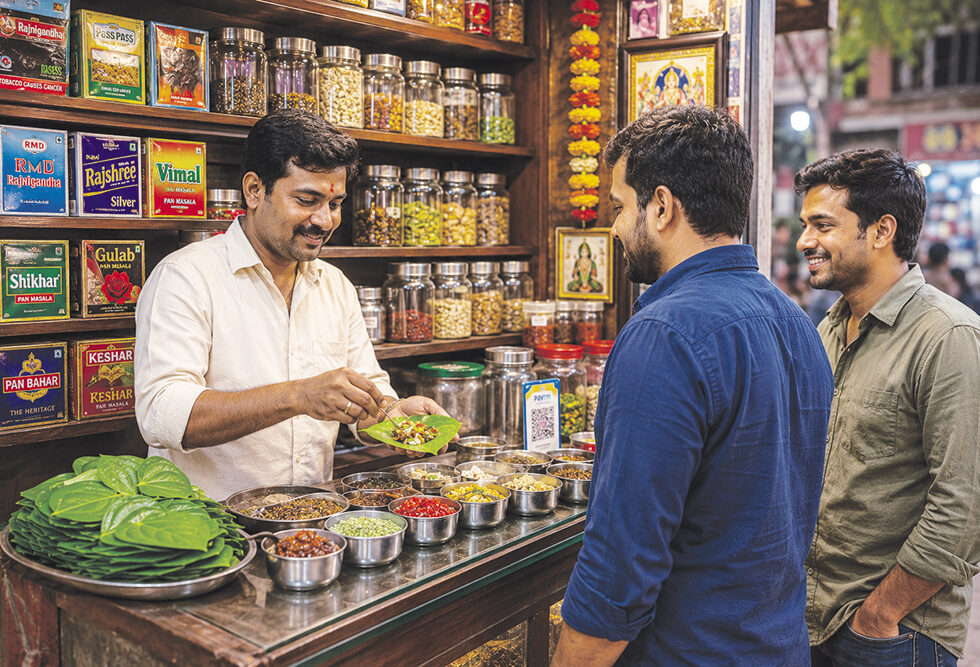
In reality, every new brand begins its journey with a Push Strategy, but its ultimate goal should always be a Pull Strategy.
When the consumer asks the retailer for the brand, the retailer asks the distributor, and the distributor demands it from the company, the brand has established genuine market power. This is the stage at which dependence on sales schemes and additional promotional incentives gradually declines, and the brand begins generating demand on its own.
Ultimately, the future of the pan masala industry is not simply about increasing sales; it is about building long-term relationships with consumers. Companies that combine consistent quality and taste, reasonable pricing, strong distribution, consumer trust, regional understanding, and modern marketing thinking will lead the market in the coming years.
After all, a strong brand is one that consumers do not merely purchase but make a part of their preference and identity.
That is the true meaning of Customer Pull the greatest measure of success for any pan masala brand and its real brand power.