
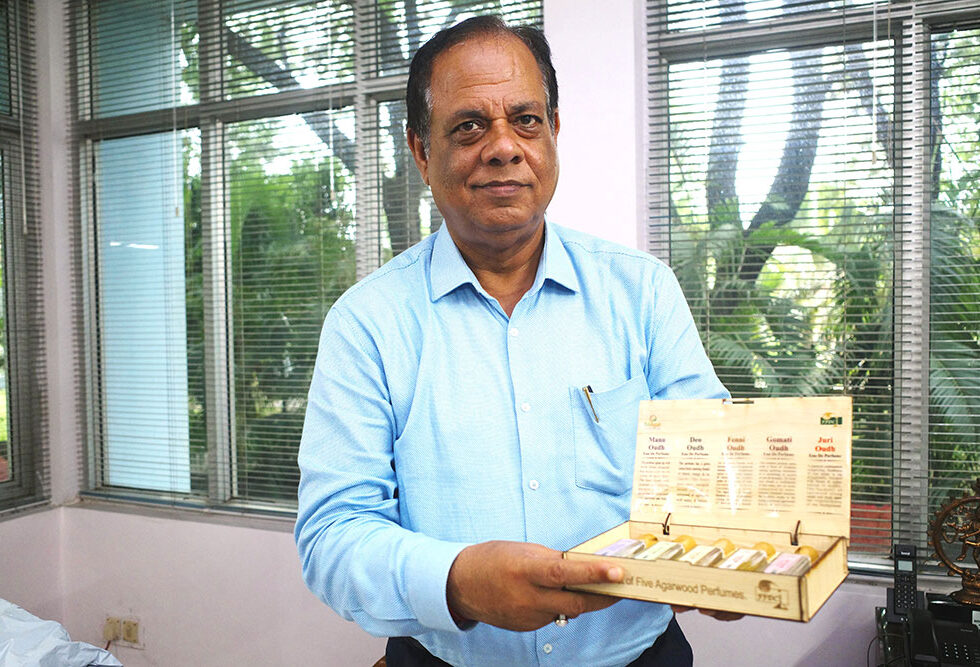
- By tabacco_Admin
- August 2026
- Jul 30, 2026
“Kannauj is not merely a place where attars are produced; it is the confluence of a fragrance tradition spanning thousands of years and modern science.”
Special Interview
Whenever natural perfumes and attars are discussed, the first name that comes to mind is Kannauj. Preserving its unique tradition of attar-making for nearly 5,500 years, the city continues to be recognized as one of the world’s most distinguished fragrance hubs. Alongside Grasse, France, Kannauj is among the few places where an entire city thrives on the fragrance industry. The aroma of flowers in its streets represents not just a business, but a culture, a heritage, and a way of life passed down through generations.
However, in today’s rapidly evolving world, heritage alone cannot sustain an industry. Global competition, rising quality standards, technological advancements, changing consumer preferences, and increasingly stringent international regulations demand continuous research and innovation. This is precisely where the Fragrance & Flavour Development Centre (FFDC), Kannauj, plays a transformative role.
Established in 1991, FFDC has evolved into much more than a research institution. Today, it serves as a technical mentor, training centre, and trusted partner for India’s fragrance and flavour industry. From flower cultivation and essential oil extraction to perfume manufacturing, incense production, quality testing, and the development of global standards, FFDC has significantly contributed to the modernization of India’s fragrance sector over the past three decades.
In an exclusive conversation with Tobacco Plus, Shakti Vinay Shukla, Principal Director of FFDC, spoke extensively about Kannauj’s historic legacy, the vision behind FFDC’s establishment, the challenges facing the industry, and the immense opportunities that lie ahead.
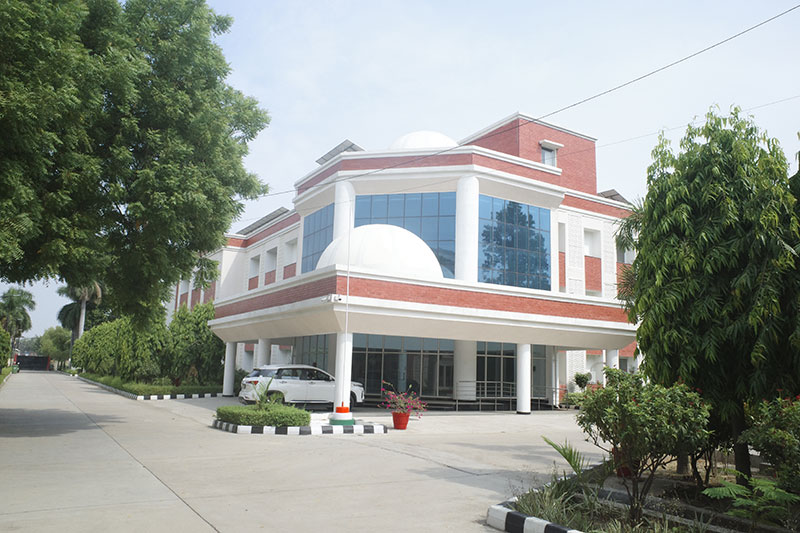
He remarked:
“Kannauj’s greatest strength lies in its traditional attar-making process. Distillation is practiced in many parts of the world, but nowhere else are distillation and blending integrated in the unique Deg-Bhapka system as they are in Kannauj. That is our true identity.”
Kannauj’s reputation stems not merely from producing perfumes, but from preserving a centuries-old method of craftsmanship. In the Deg-Bhapka process, the delicate fragrance of natural flowers is carefully infused into sandalwood oil through traditional hydro-distillation. This is why products such as Mitti Attar, Hina, Shamama, Choya Nakh, and many other classic attars are internationally admired for their remarkable depth, authenticity, and long-lasting aroma.
According to FFDC, just as food cooked in an earthen pot possesses a flavour that modern cookware cannot fully replicate, attars produced through the traditional Deg-Bhapka system exhibit a richness and natural complexity that modern methods cannot completely reproduce. Therefore, the future lies not in replacing tradition but in strengthening it through scientific innovation.
This unique characteristic distinguishes Kannauj from every other fragrance centre in the world. Even today, nearly 30,000–35,000 people are directly or indirectly dependent on the fragrance industry. Their livelihoods are linked to flower cultivation, aromatic crop production, essential oil extraction, packaging, trading, transportation, and numerous allied activities. Recognizing its importance, the Government of Uttar Pradesh included Attar under the One District One Product (ODOP) scheme, later extending the recognition to the incense industry as well.
The very foundation of FFDC was driven by the objective of ensuring that scientific research does not remain confined to laboratories but reaches the industry where it can create real impact.
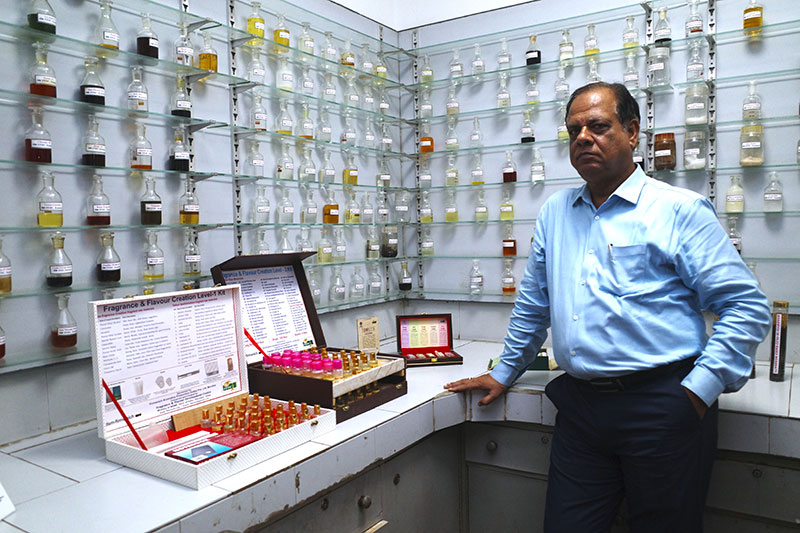
As the Principal Director explains:
“We realized that many technologies developed in universities and research laboratories were not reaching the industry in time. FFDC was established to bridge this gap by creating a strong link between research and industry.”
To achieve this vision, the Government of Uttar Pradesh, the Government of India, and the United Nations Industrial Development Organization (UNIDO) collaborated to establish FFDC. The state government provided land and infrastructure, the central government extended financial and administrative support, while UNIDO contributed international technical expertise. This tripartite collaboration has resulted in one of India’s strongest institutions dedicated to the fragrance and flavour sector.
Today, FFDC’s work extends far beyond research. It guides farmers in selecting the most suitable aromatic crops and varieties for commercial cultivation. For example, among more than 2,000 varieties of roses, only a handful are suitable for producing premium-quality rose oil or attar. Similarly, FFDC provides technical support for the scientific cultivation of lemongrass, vetiver, citronella, sandalwood, patchouli, and other aromatic plants, covering every stage from plant selection and cultivation to oil extraction and quality evaluation.
The institution firmly believes that if farmers receive the right planting material, appropriate technology, and reliable market intelligence, India can significantly strengthen its position in the global fragrance industry. This philosophy is reflected in every training programme and development project undertaken by FFDC.
Research Opportunities in the Pan Masala Sector
The flavour industry also includes an important segment represented by pan masala and related products. According to FFDC, this sector offers enormous scope for scientific research, although relatively little work has been carried out so far.
The institution believes that the primary concern often lies not with betel or other natural ingredients themselves, but with the use of artificial chemicals and non-food-grade flavouring agents, which are sometimes employed to reduce production costs. By promoting research-based, food-grade, and naturally derived ingredients, the industry can develop products that are significantly safer than many existing alternatives.
FFDC has clearly stated that if the industry takes initiative in this direction, the Centre is fully prepared to provide research support and technical expertise.
Standardization and Scientific Leadership
Beyond research and training, FFDC plays a vital role in standardization within India’s fragrance industry.
The Centre has made significant contributions to the development of Indian Standards for the incense industry. Working in collaboration with the Khadi and Village Industries Commission (KVIC), FFDC developed several technical standards that continue to guide incense manufacturers across the country.
Similarly, FFDC has conducted scientific studies relating to various International Fragrance Association (IFRA) standards. Its research demonstrated that certain international restrictions require reassessment under Indian conditions. These scientific findings have played an important role in safeguarding the interests of the Indian fragrance industry.
FFDC has also contributed significantly to the development of Indian standards for Agarwood (Oud) in collaboration with the Bureau of Indian Standards (BIS) and several state governments.
In addition, FFDC developed a range of natural Oud-based perfumes for the Government of Tripura, which were officially launched by the Chief Minister of Tripura.
India’s Premier Training Centre for Fragrance & Flavour
Today, FFDC is widely recognized as India’s leading training institution for the fragrance and flavour industry.
Its programmes cater not only to the perfume industry but also to professionals associated with incense, perfumes, cosmetics, pan masala, flavours, food processing, and essential oils.
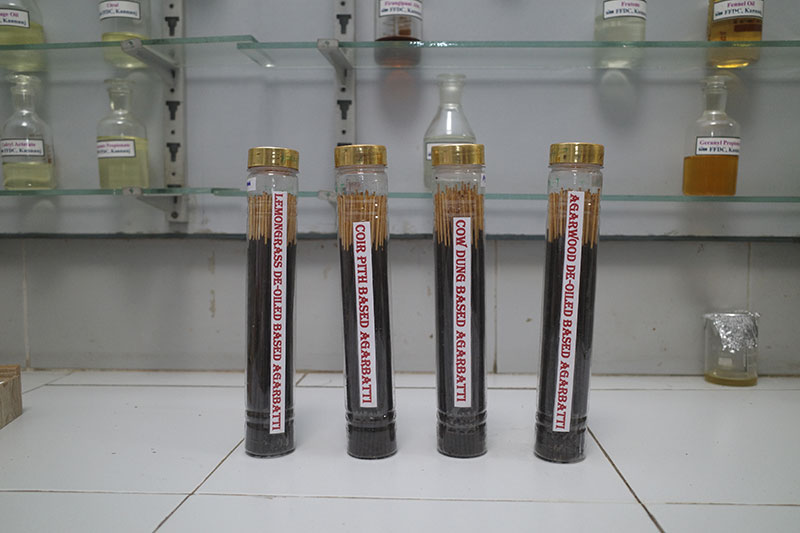
The Centre offers:
- One-week Fragrance & Flavour Training Programmes
- Level I, Level II and Level III Professional Courses
- One-year Diploma Programme
- Postgraduate-level specialized courses
- Short-term technical training programmes for farmers and entrepreneurs
More recently, in collaboration with Chhatrapati Shahu Ji Maharaj University, Kanpur, FFDC launched an M.Sc. in Fragrance & Flavour, enabling students to gain practical industry experience through internships.
Students receive industrial exposure at leading perfume, flavour, and cosmetic companies, helping them understand the real-world requirements of the industry.
Many FFDC alumni today occupy key positions in leading fragrance and flavour companies across India, Dubai, Europe, and several other countries. Numerous graduates have successfully established their own brands, while others have risen to senior positions in multinational companies.
Their success demonstrates that India’s fragrance and flavour sector is no longer merely a traditional occupation—it has emerged as a promising and rewarding career avenue for the next generation of professionals.