
- By tabacco_Admin
- November 2026
- Oct 28, 2026
Banarasi Paan Bhandar: Preserving Bhopal’s Paan Culture and Traditional Flavours Since 1960
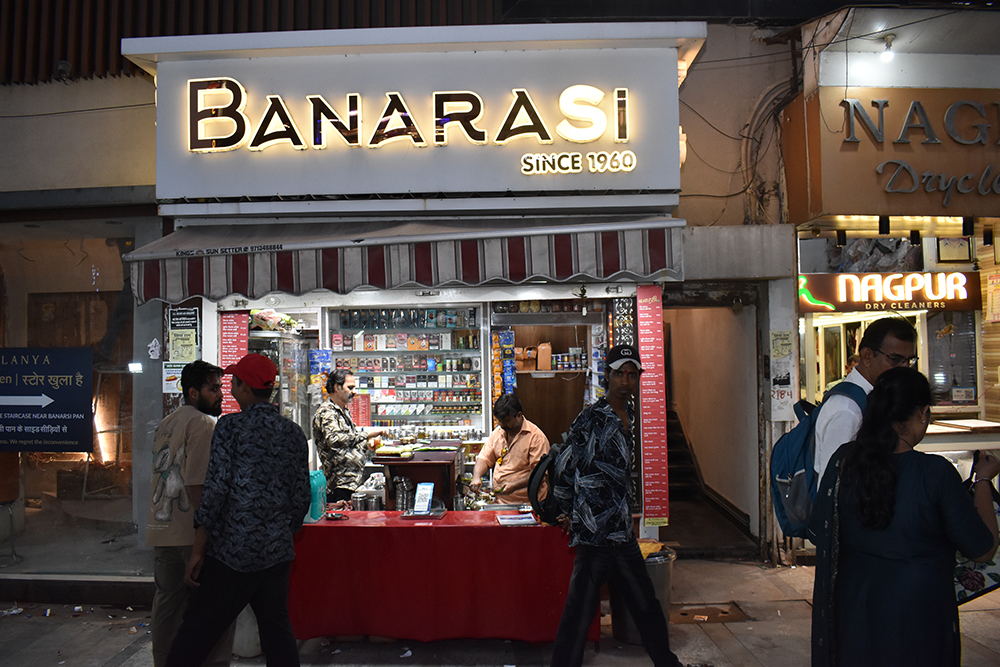
Bhopal’s Nawabi culture has always regarded paan as more than just a treat for the palate. It has been an integral part of hospitality, etiquette and social interaction. Times have changed, generations have moved on, and new experiments have influenced people’s taste preferences, yet the charm of traditional paan flavours remains undiminished. Preserving this legacy for more than six decades is Banarasi Paan Bhandar, located in New Market, TT Nagar, Bhopal. Established in 1960, the outlet continues to maintain its distinct identity through family recipes, carefully selected ingredients and traditional preparation methods. For its present proprietor, Rajendra Banarasi, the business is not merely a means of livelihood but a commitment to carrying forward the flavour traditions inherited from his forefathers—traditions that have earned Banarasi Paan Bhandar a special place among paan lovers in Bhopal.
In India, paan has never been just a food item; it has also been an integral part of social interaction, hospitality and cultural traditions. Offering paan to guests has long been regarded as a gesture of respect and welcome. Across different regions of the country, paan preparation methods, leaf varieties and flavour combinations have evolved in accordance with local cultures. In Bhopal, too, paan has remained closely connected with the city’s historic etiquette and culinary traditions.
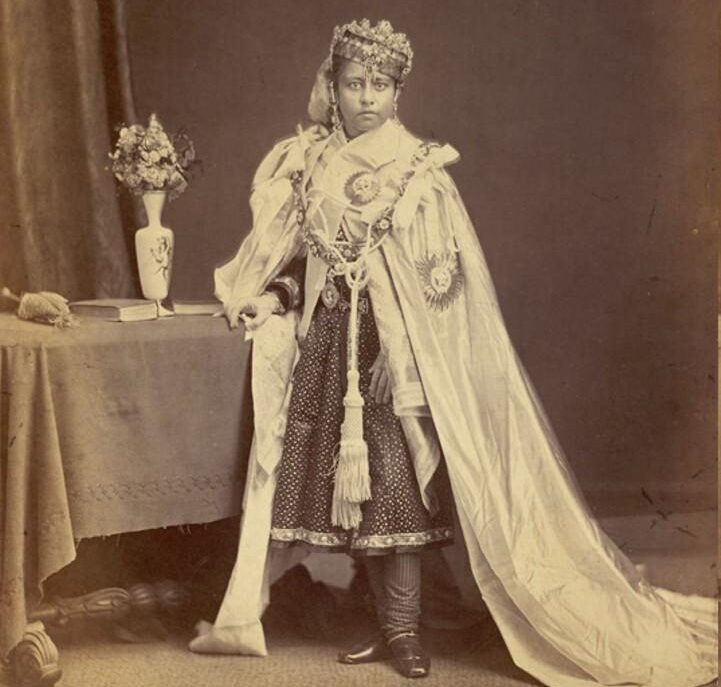
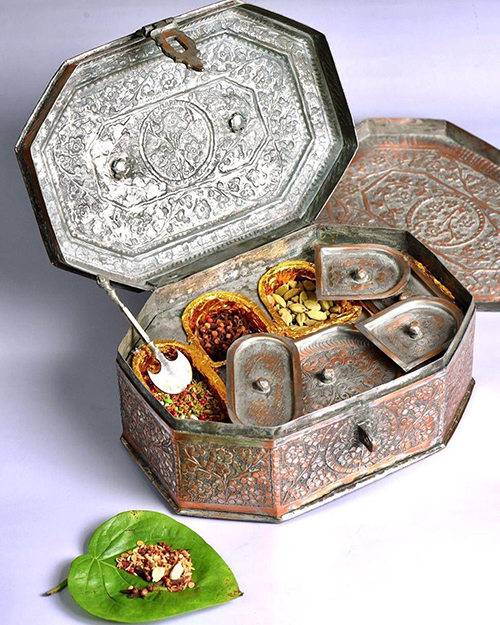
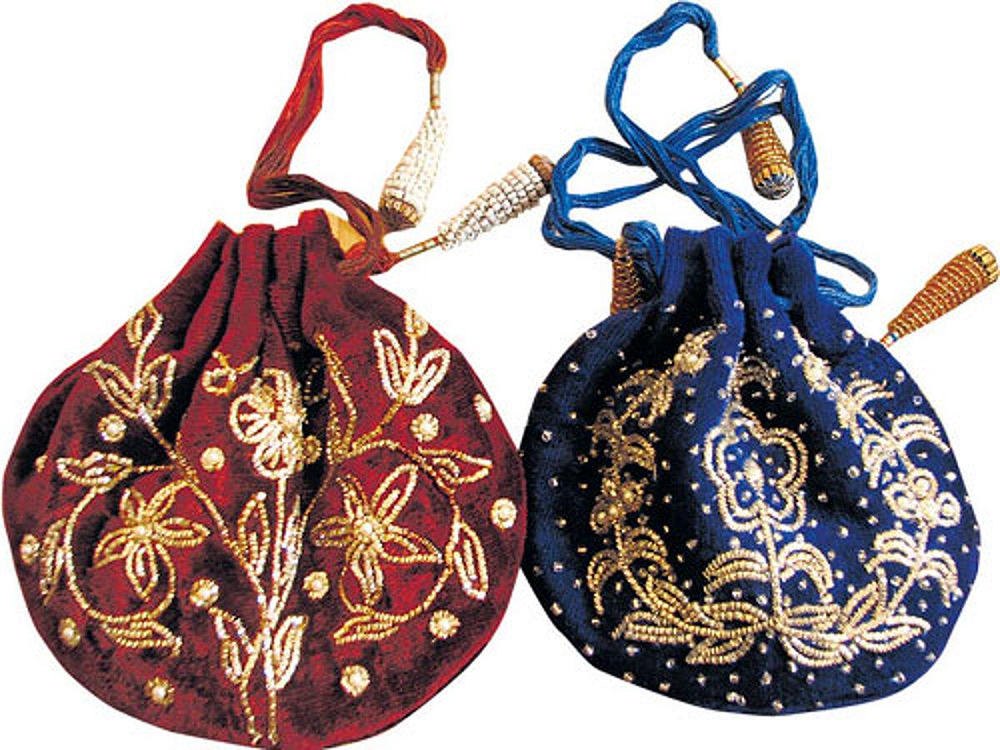
The Nawabi era occupies a special place in Bhopal’s cultural heritage. The lifestyle of that period had its own distinctive identity in food, clothing, handicrafts and hospitality. Traditional handicrafts such as the Bhopali batua have also been associated with paan culture. Decorative pouches and boxes used to store paan ingredients reflect the cultural significance of this tradition. Over time, the city has expanded and culinary preferences have evolved, but paan continues to be part of Bhopal’s local lifestyle and market culture.
Against this cultural backdrop, the story of Banarasi Paan Bhandar in New Market, TT Nagar, becomes particularly noteworthy. The establishment was started in 1960 by the father of its present proprietor, Rajendra Banarasi. Over more than six decades, the outlet has continued to preserve the art of traditional paan preparation. Even today, consistency of flavour and the use of time-tested recipes remain priorities. For Rajendra Banarasi, this is not simply a business legacy but also a responsibility to preserve the traditional taste with which generations of customers have developed lasting memories and preferences.
Turning Tradition into a Business Strength
Success in the paan business does not depend solely on increasing the variety of products. The selection of leaves, the balance of lime and catechu, the quality of areca nut, and the combination of sweetness and flavours collectively determine the distinctive taste of a paan outlet. Banarasi Paan Bhandar has built its business identity on this understanding.
According to Rajendra Banarasi, the basic method of preparing paan at his establishment remains the same as the one followed by his father. Despite the growing popularity of new flavour experiments and attractive presentations in the market, he has continued to give priority to traditional recipes. He believes that customers still appreciate paan prepared using conventional methods. This trust is the establishment’s greatest asset.
One of the major challenges facing traditional businesses is to introduce variety in response to changing customer preferences without compromising their original identity. Banarasi Paan Bhandar appears to have built its model around this balance. Alongside traditional Banarasi and Maghai paan, it offers several varieties of sweet paan to cater to different customer preferences.
Strong Emphasis on Quality and Ingredient Selection
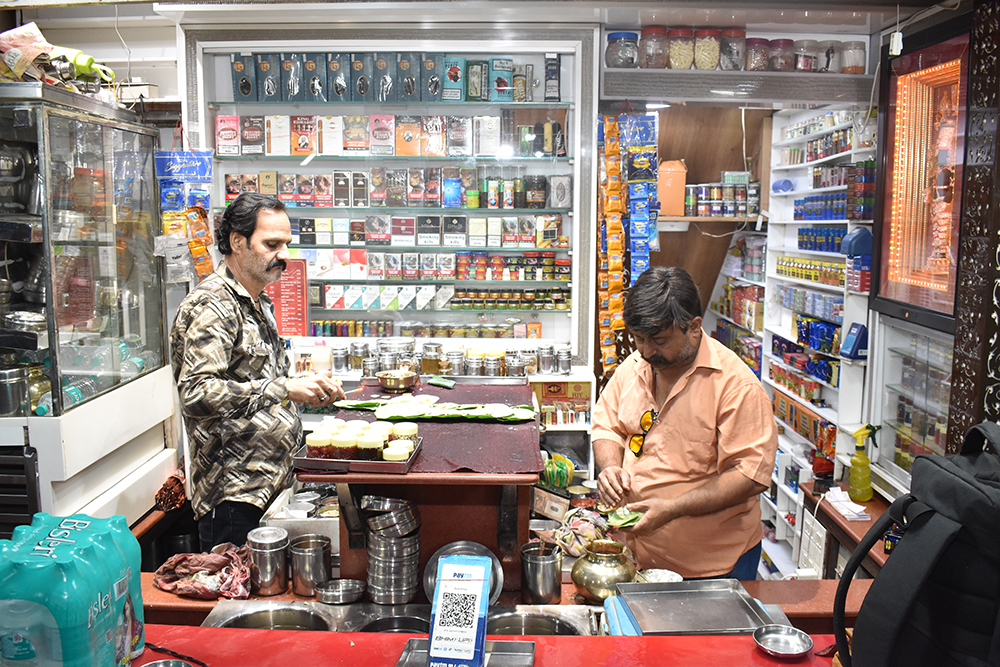
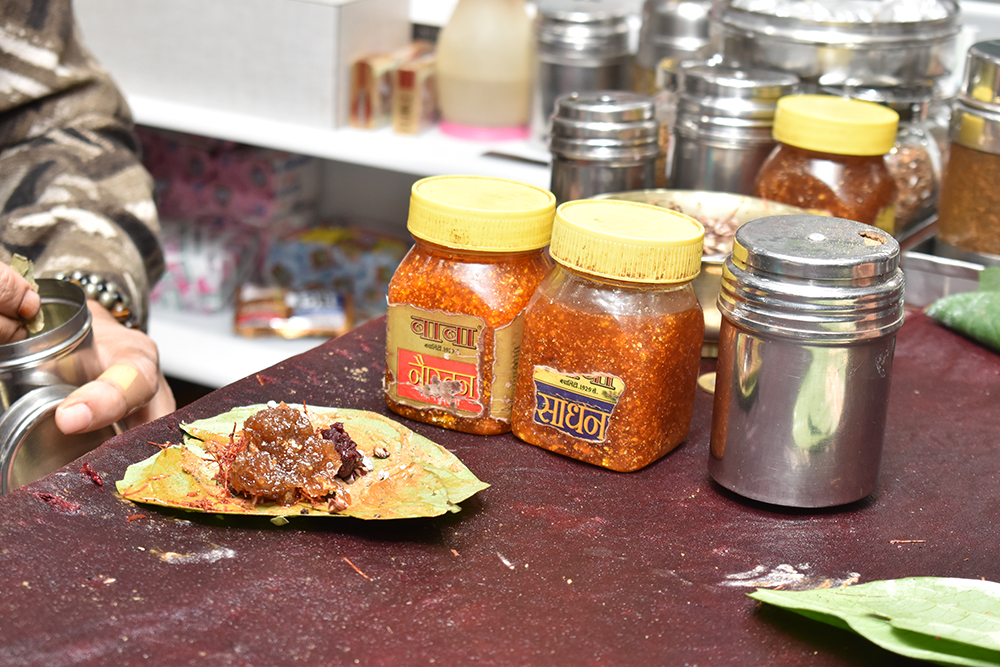
Every ingredient used in paan plays an important role in determining its flavour. The balance of lime, catechu, areca nut, cardamom, gulkand and chutney defines the final taste of the prepared paan. Banarasi Paan Bhandar places particular emphasis on the selection of ingredients.
According to Rajendra Banarasi, the establishment uses branded products for chutney, gulkand and other ingredients. The chutney brands include Baba’s Nauratan, Sadhana and Meenakshi. He believes that maintaining consistent quality alongside flavour is essential to retaining customers over the long term.
Customers in the paan business often become accustomed to the distinctive taste of a particular outlet. They do not visit merely to buy paan; they return in search of a familiar flavour. Consequently, ingredient quality and preparation methods become important elements of an establishment’s identity. The tradition upheld by Banarasi Paan Bhandar reflects this very philosophy.
A Variety of 20–25 Traditional and Sweet Paan Options
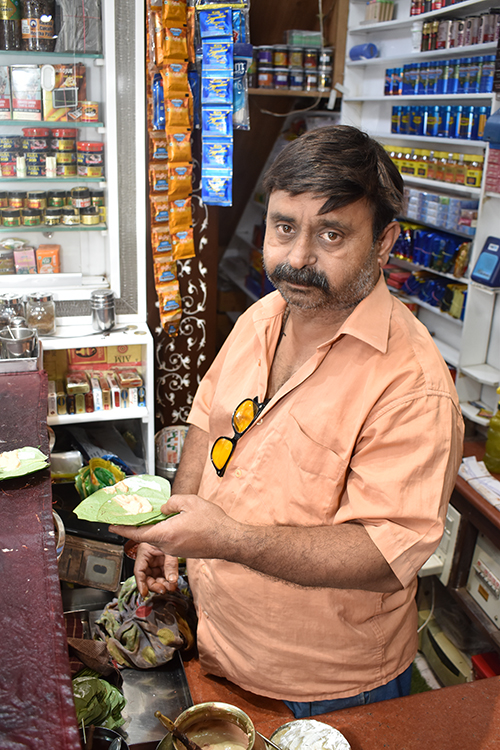
Banarasi Paan Bhandar offers approximately 20–25 varieties of paan, ranging from zarda paan to sweet paan. The outlet uses sweet, Banarasi and Maghai leaves. Different combinations of leaves and ingredients provide customers with options to suit their individual preferences.
Its special offerings include Special Meetha Paan, Special Banarasi Paan and Special Maghai Paan. According to Rajendra Banarasi, Maghai Meetha Paan enjoys the highest demand. Silver-coated Maghai Meetha Paan is also among the customers’ preferred choices.
As sweet paan has grown in popularity, variety within this category has expanded as well. Customers now look beyond sweetness and increasingly appreciate combinations of different flavours and ingredients. Banarasi Paan Bhandar focuses on preparing different varieties of sweet paan with distinct flavour profiles. This provides customers with multiple choices within a single category and strengthens the outlet’s product identity.
Paan Priced from ₹25 to ₹600, Catering to Different Customer Segments
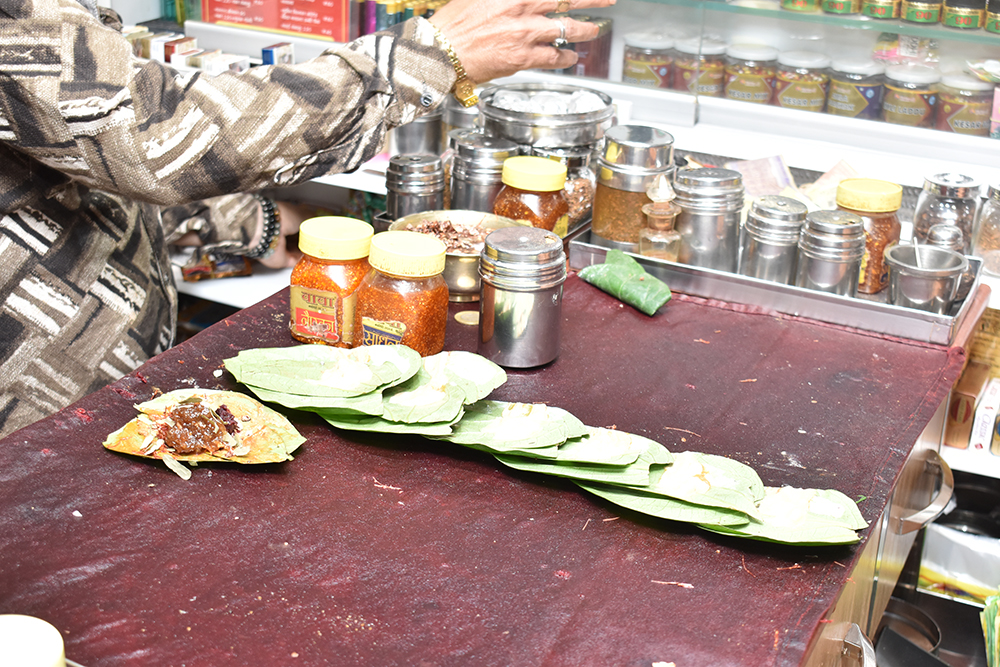
Banarasi Paan Bhandar offers a wide price range, with paan available from ₹25 to ₹600. This diversity enables the outlet to cater to customers seeking everyday options as well as those looking for specialised and premium offerings.
In the zarda paan category, Baba 160 and Baba 120 are used. The kimam range includes Banarasi and Navratan, along with No. 90 and No. 600 kimam, which are preferred by select customers. Chaman Bahar, a flavouring ingredient popular among Bhopal’s customers, is also used in zarda paan.
This product range highlights the diversity of preferences in the traditional paan market. While some customers choose familiar flavours and regularly priced options, others prefer specialised ingredients and premium products. By balancing different prices and flavour profiles, Banarasi Paan Bhandar turns this diversity into a business strength.
Paan Preparation Is an Art
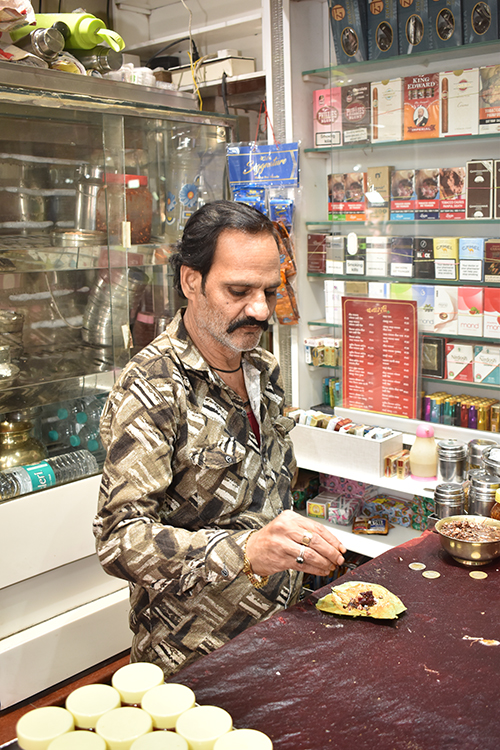
The taste of a good paan depends on more than the ingredients used. The selection of the leaf, the precise quantity of each ingredient, the balance of sweetness and flavour, and the technique used to fold the paan are equally important. This is why paan prepared by experienced vendors often develops a distinctive taste and identity.
Banarasi Paan Bhandar places emphasis on traditional preparation methods. Rajendra Banarasi says his family continues to follow the approach used when his father first began preparing paan. Preserving old recipes while offering distinct flavours across different varieties remains an integral part of the establishment’s working philosophy.
The art of paan preparation also has cultural significance. In Indian tradition, paandans, *sarautas* used to cut areca nuts, and small containers for storing paan ingredients have served purposes beyond everyday utility. They have also been associated with social etiquette and hospitality. Bhopal’s historic paan culture represents a local expression of this broader Indian tradition.
The Establishment’s Reputation Has Reached Film Personalities
Speaking about the popularity of Banarasi Paan Bhandar, Rajendra Banarasi says that several film personalities, including actors Kapil Sharma and Anil Kapoor, as well as well-known figures from other fields, have tasted the outlet’s paan. Such recognition can bring wider attention to a local establishment, but its long-term business ultimately depends on customer trust and product quality.
The outlet operates from 9 a.m. to midnight. Its extended business hours and wide range of paan varieties enable it to cater to customers visiting at different times of the day.
Preserving Heritage: The Key to Lasting Business Success
The journey of Banarasi Paan Bhandar over more than six decades offers an important lesson for traditional businesses. In a changing market, new flavours, attractive presentations and premium products are finding their place. However, an establishment’s core identity is built through quality, consistency of taste and the trust it develops with customers.
Bhopal’s paan culture, rooted in its Nawabi heritage and the Indian tradition of hospitality, demonstrates that paan’s significance has never been limited to its flavour. It has also been connected with social life, local markets and cultural identity. Banarasi Paan Bhandar continues to build on this broader tradition through its family recipes and diverse product range.
Located in New Market, TT Nagar, the establishment demonstrates that a traditional business can remain relevant while preserving its original flavours. Its story is not merely one of a successful paan shop, but also of a skill and heritage shaped by generations of experience and kept alive through the enduring preferences of its customers.